
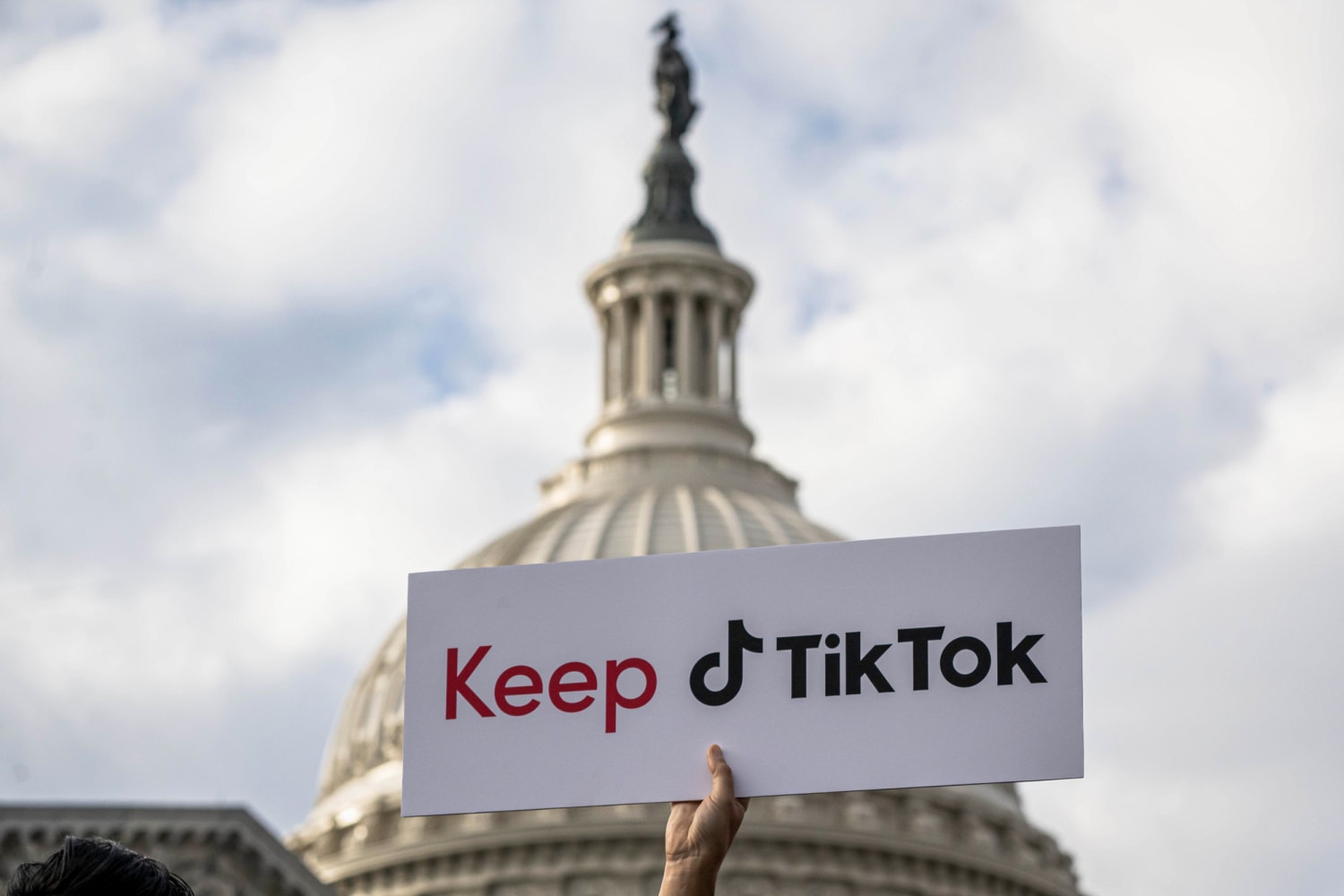
In April 2024, President Joe Biden signed a law requiring TikTok’s Chinese-based parent company, ByteDance Ltd., to sell its popular video-sharing app to an American corporation within a year or face a nationwide ban in the U.S., according to reporting by the AP.
Facing the potential loss of millions of users — a third of U.S. adults and nearly three-quarters of U.S. teens reportedly use TikTok, according to the Pew Research Center — ByteDance filed a first-amendment lawsuit in May 2024 with the U.S. Court of Appeals in Washington, D.C., the AP reports.
In December 2024, a federal appeals court upheld the U.S. ruling that would effectively ban TikTok, citing concerns over China’s data collection and “covert content manipulation efforts,” court documents show.
ByteDance appealed to the U.S. Supreme Court, and on January 10, the highest court in the nation heard oral arguments that would decide the fate of millions of U.S. TikTok users.
*The following blog was compiled using the Supreme Court’s oral argument audio: Listen in: https://www.supremecourt.gov/oral_arguments/audio/2024/24-656
Oral arguments begin as TikTok attorneys challenge U.S. ruling – 2:50 p.m. ET
TikTok attorney Noel J. Francisco calls the ban “a burden on TikTok’s speech,” citing the First Amendment.
“The government’s real target, rather,
is the speech itself, its fear that Americans,
even if fully informed, could be persuaded by
Chinese misinformation. That, however, is a
decision that the First Amendment leaves to the
people.”
Is it a restriction on ByteDance or on TikTok’s speech? Justices question First-Amendment application – 3 p.m. ET
Chief Justice Clarence Thomas asks:
“So you’re converting the restriction on ByteDance’s ownership of the algorithm and the company into a restriction on TikTok’s speech. So why can’t we simply look at it as a restriction on ByteDance?”
‘Doing intelligence work for the Chinese government’ – 3:10 p.m. ET
Chief Justice Roberts challenges Francisco’s assertion that TikTok is a U.S. company operating in the U.S.
ByteDance, was found by Congress to be subject to Chinese laws that require it to assist or cooperate with the Chinese government’s intelligence work and to ensure that the Chinese government has the power to access and control private data that the company
holds. So are we supposed to ignore the fact that the ultimate parent is, in fact, subject to doing intelligence work for the Chinese government?
TikTok reps distinguish it from parent company ByteDance – 3:20 p.m. ET
Francisco asserts the fact that as a U.S. company, TikTok, unlike ByteDance, can shut down its platform if the Chinese attempted to control the algorithm.
“TikTok does not operate in China…..We haven’t removed or restricted content at the request of China.”
‘Blackmail, develop spies’: Is there national security threat? – 3:30 p.m. ET
Justice Brett Kavanough explores hypothetical concerns:
“If the Chinese were accessing information about millions of
Americans, tens of millions of Americans, including teenagers, people in their 20s, that they would use that information over time to develop spies, to turn people, to blackmail people, who, a generation from now, will be working in the FBI or the CIA.”
Not trying to take away content creators’ free speech – 3:40 p.m. ET
Attorney General Elizabeth Prelogar argues that the law is not content-based.
“All the act is doing is trying to surgically remove the ability of a foreign
adversary nation to get our data and to be able to exercise control over the platform.”
‘Ultimately boils down to speech’: TikTok reps make closing statements – 3:50 p.m. ET
“If the First Amendment means anything, it means that the government cannot restrict speech in order to protect us from speech. That’s precisely what this law does from beginning to end.”
Leave a Reply